

Account Based Marketing Framework for B2B Growth becomes a priority for many organizations after early ABM efforts fail to deliver consistent results. B2B teams often invest in targeting tools, align sales and marketing, and launch personalized campaigns, yet struggle to translate activity into measurable pipeline impact. Industry research from Demand Gen Report shows that a large portion of B2B marketers find it difficult to scale account based marketing beyond initial pilot programs.
Key Takeaways for B2B Leaders
A successful account based marketing framework for B2B growth provides clarity, consistency, and scalability.
Key points to remember
- ABM requires structure, not just tactics
- Account selection drives downstream success
- Buying group insight improves relevance
- Sales and marketing alignment is essential
- Measurement should focus on revenue impact
Frameworks turn ABM into a repeatable growth engine.
The challenge is rarely ambition or budget. It is the absence of a clear, repeatable structure. Without a defined framework, ABM initiatives become fragmented, reactive, and hard to sustain. This article outlines a practical, step by step account based marketing framework that helps B2B teams move from experimentation to disciplined execution and long term growth.
What Is an Account Based Marketing Framework
An account based marketing framework is a structured approach that guides how B2B organizations plan, execute, and measure ABM programs. It connects strategy to execution and ensures every tactic supports revenue goals.
Rather than running isolated ABM campaigns, a framework provides clarity on:
- Who to target
- How to prioritize accounts
- What messages to deliver
- Which channels to use
- How success is measured
This approach turns ABM into a repeatable B2B marketing approach rather than a one off initiative.
Why B2B Teams Need a Clear ABM Framework
Many ABM programs fail because teams jump straight into tactics. Ads are launched, content is personalized, and sales outreach begins without a shared roadmap.
Common issues include,
- Unclear account selection criteria
- Inconsistent messaging across channels
- Misalignment between sales and marketing
- Overreliance on tools without strategy
- Difficulty proving ROI
A defined account based marketing framework reduces these risks by aligning teams around a common process.
Key Benefits of Using an Account Based Marketing Framework
Adopting a structured framework delivers both operational and strategic advantages.
Improved Focus on High Value Accounts
Teams concentrate resources on accounts with the highest revenue potential rather than spreading efforts too thin.
Stronger Sales and Marketing Alignment
A shared framework creates clarity around roles, responsibilities, and success metrics.
Consistent Buyer Experiences
Messaging and engagement stay aligned across channels and buying stages.
Scalable ABM Execution
Frameworks make it easier to expand ABM programs across regions, segments, or industries.
Clear Measurement and Accountability
Success is tracked against pipeline, deal progression, and revenue influence rather than surface level engagement.
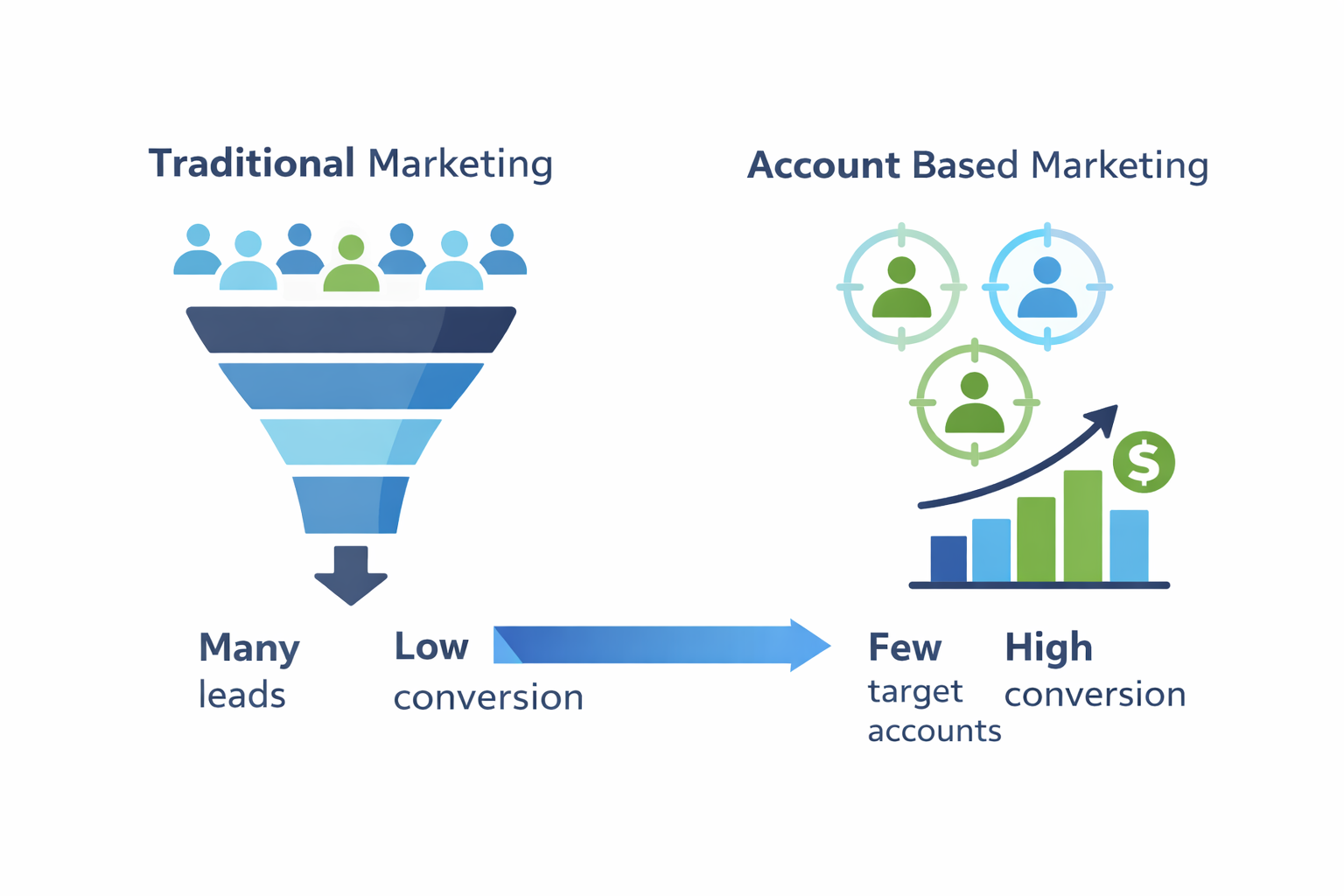
A Practical Step by Step Account Based Marketing Framework for B2B Growth
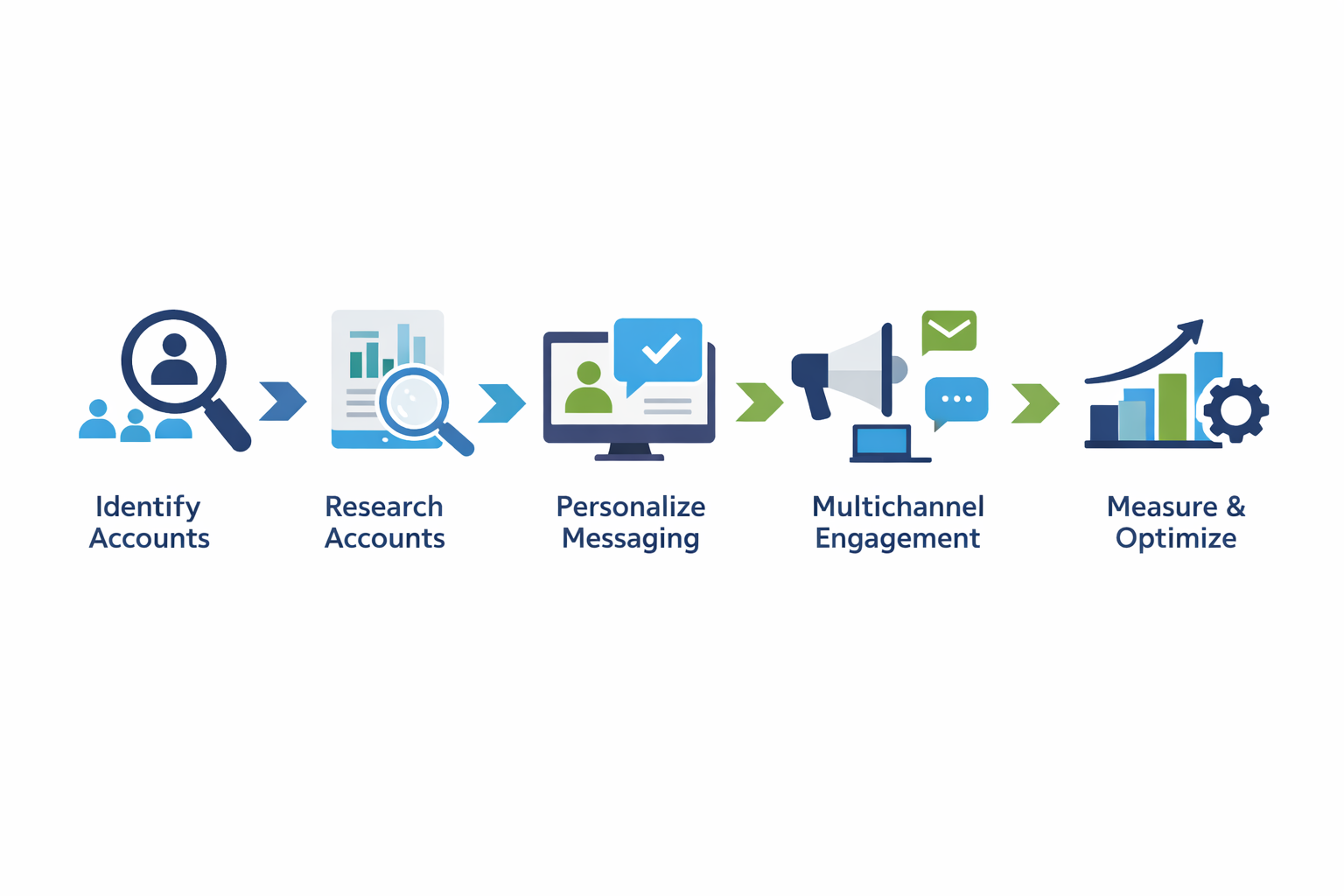
This account based marketing framework for B2B growth follows a logical sequence that connects strategy to execution.
Step 1: Define Business Goals and ABM Scope
ABM should support broader business objectives. The first step is clarifying what success looks like.
Key questions to answer
- Is the goal pipeline acceleration, deal expansion, or new logo acquisition
- Which markets or segments are priorities
- What revenue targets must ABM support
Clear goals ensure ABM efforts stay focused and measurable.
Step 2: Identify and Prioritize Target Accounts
Account selection is the foundation of ABM success. Poor targeting undermines every downstream effort.
Effective account selection considers
- Revenue potential and deal size
- Strategic fit and long term value
- Buying intent and market signals
- Existing relationships and account history
Accounts are often grouped into tiers based on value and readiness, allowing teams to tailor effort levels appropriately.
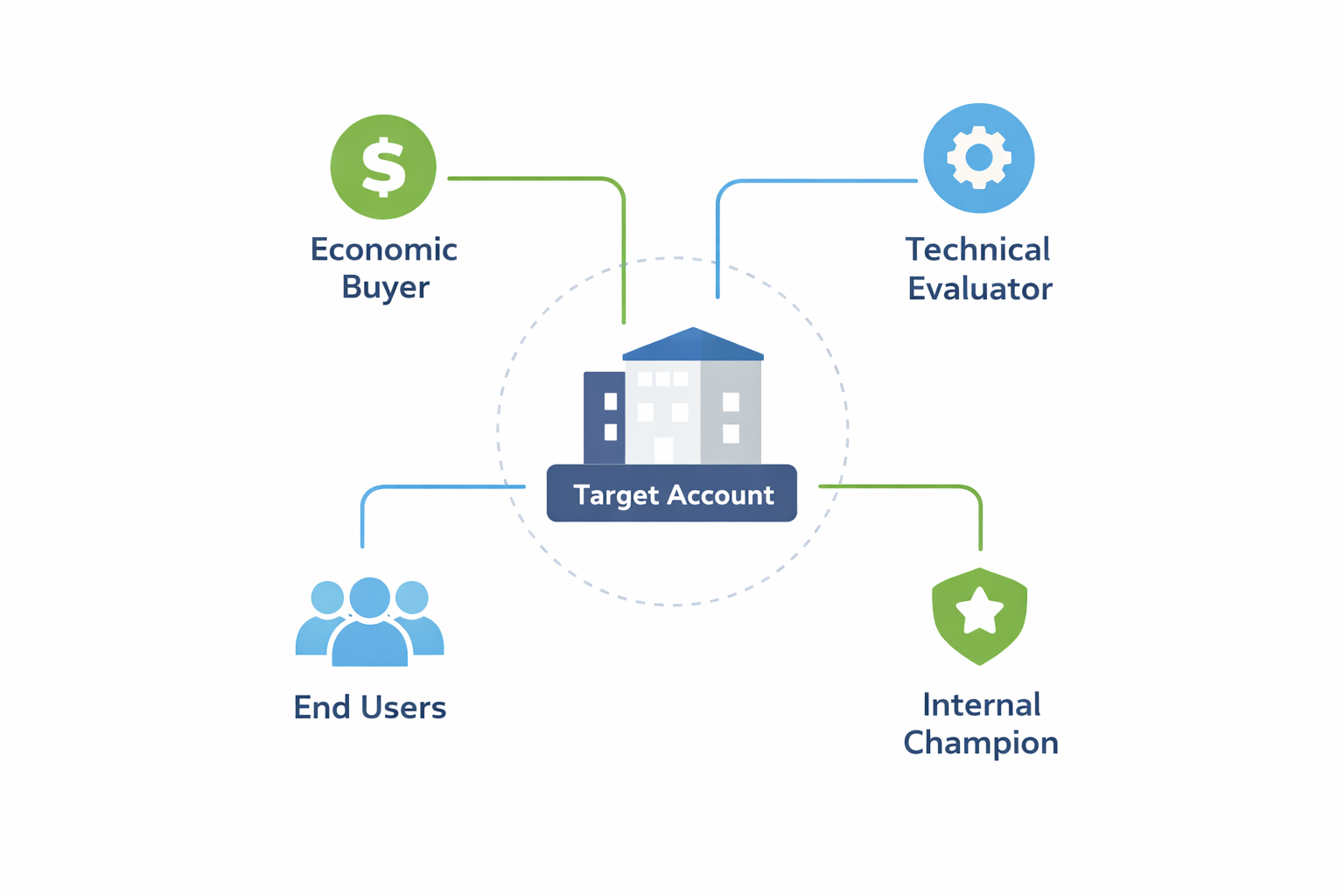
Step 3: Map Buying Groups and Stakeholders
B2B purchases involve multiple decision makers. Understanding who influences decisions within each account is critical.
Buying group mapping typically includes
- Economic buyers
- Technical evaluators
- Day to day users
- Internal champions
This step ensures messaging resonates with real concerns rather than generic personas.
Step 4: Develop Account Based Messaging and Content
With buying groups defined, teams can build messaging that speaks directly to account specific challenges and goals.
Effective ABM messaging is
- Relevant to the account context
- Aligned to the buyer role
- Consistent across channels
- Focused on value rather than features
Content may include tailored case studies, targeted thought leadership, or personalized outreach assets.
Step 5: Select Channels and ABM Tactics
Channels should support how target accounts prefer to engage. This is where ABM tactics come into play.
Common ABM tactics include
- Personalized email and sales outreach
- Targeted advertising to key accounts
- Account specific content hubs
- Executive level events or briefings
The goal is coordinated engagement, not isolated activities.
Step 6: Align Sales and Marketing Execution
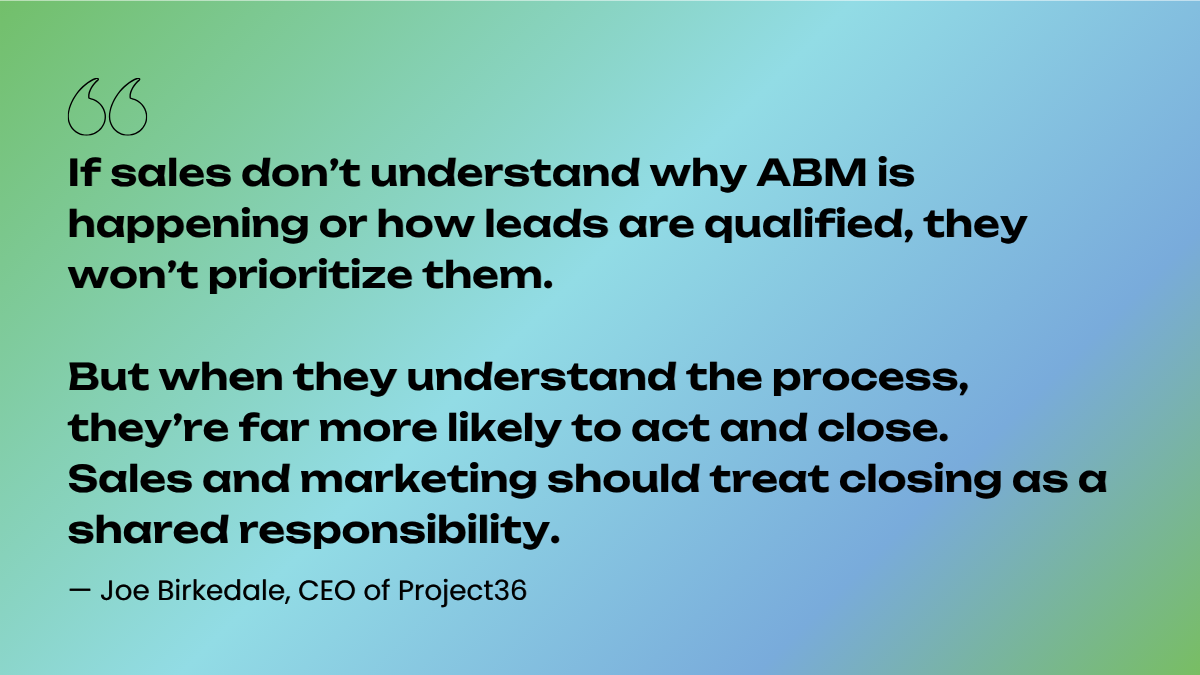
ABM depends on close collaboration. Sales and marketing must operate as a single revenue team.
Alignment includes
- Shared account plans
- Clear handoffs and follow up expectations
- Regular performance reviews
- Unified reporting dashboards
This step prevents duplication and ensures consistent engagement.
Step 7: Measure Performance and Optimize
Measurement closes the loop. Teams should track metrics tied to revenue impact.
Common ABM metrics include
- Account engagement trends
- Opportunity creation and progression
- Deal velocity
- Revenue influenced by ABM
Insights from performance data guide ongoing optimization and refinement.
Example ABM Framework Overview Stage
| Stage | Primary Focus | Key Output |
| Goal Definition | Business and revenue alignment | Clearly defined ABM objectives |
| Account Selection | Target account prioritization | Tiered list of high value accounts |
| Buying Group Mapping | Stakeholder identification | Role based buying group profiles |
| Messaging and Content | Personalization and relevance | Account specific messaging and assets |
| Campaign Execution | Coordinated multichannel engagement | Integrated ABM campaigns |
| Measurement and Optimization | Performance tracking and improvement | Revenue and pipeline impact insights |
This table highlights how each stage builds on the previous one.
Best Practices for Applying the Framework
Experienced B2B teams follow several account based marketing best practices.
- Start with a pilot program before scaling
- Limit initial account volume to maintain quality
- Review account lists quarterly
- Involve sales early in planning
- Continuously refine messaging based on feedback
These practices help teams avoid common ABM pitfalls.
How This Framework Connects to ABM Strategy
A framework works best when grounded in a clear strategic foundation. Without strategy, even the best process becomes tactical.
The article Account Based Marketing Strategy: How to Build and Execute a Winning ABM Plan explains how to define objectives, align teams, and establish governance before execution begins. Reviewing that strategy alongside this framework helps B2B teams ensure they are solving the right problems before scaling ABM efforts.
When to Consider External Support
Not every organization can execute this framework internally. Complexity increases as programs scale.
The guide When Should You Hire an Account Based Marketing Agency? outlines scenarios where external expertise adds value. It helps teams assess whether gaps in experience, capacity, or execution speed justify agency support to accelerate results.
FAQs About ABM Framework:
How long does it take to see results from an ABM framework?
Most B2B organizations begin seeing early engagement signals within 60-90 days, but meaningful pipeline impact typically takes 3-6 months depending on deal size, sales cycles, and execution consistency.
What are the most important metrics in an ABM framework?
The most valuable metrics include:
- Account engagement
- Opportunity creation
- Pipeline velocity
- Deal size and win rate
- Revenue influenced by ABM
Vanity metrics like clicks or impressions should not be primary success indicators.
Can small B2B teams implement an ABM framework effectively?
Yes. Small teams often succeed with ABM because they can stay focused. Starting with a small, high-value account list and a simple framework is more effective than trying to scale too quickly.
How can Ryoku Growth help implement an ABM framework?
Ryoku Growth helps B2B companies design and execute scalable ABM frameworks by combining strategic planning, account intelligence, personalized messaging, and coordinated campaign execution. The focus is on driving measurable pipeline impact, not just engagement.
Account Based Marketing Framework for Sustainable B2B Growth
Building an account based marketing framework is not about adding complexity. It is about creating focus. When teams follow a clear, step by step approach, ABM becomes easier to manage, measure, and scale.
Whether you are launching ABM for the first time or refining an existing program, a structured framework helps turn intent into execution. Assess your current process, identify gaps, and apply this framework to drive consistent B2B growth with confidence.